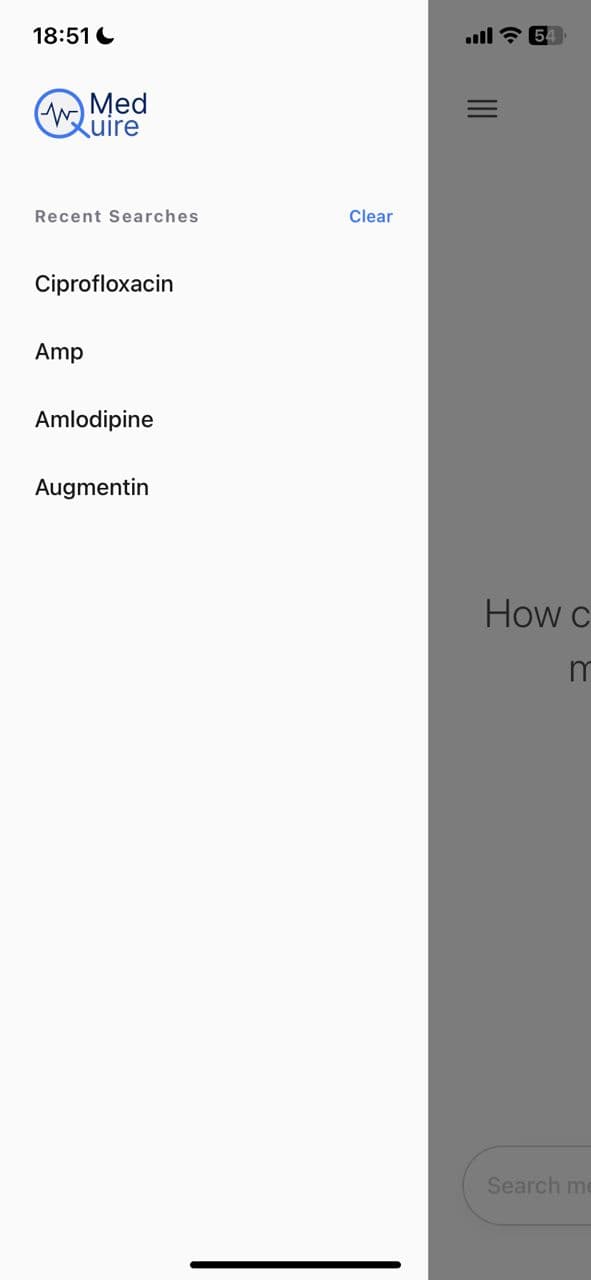
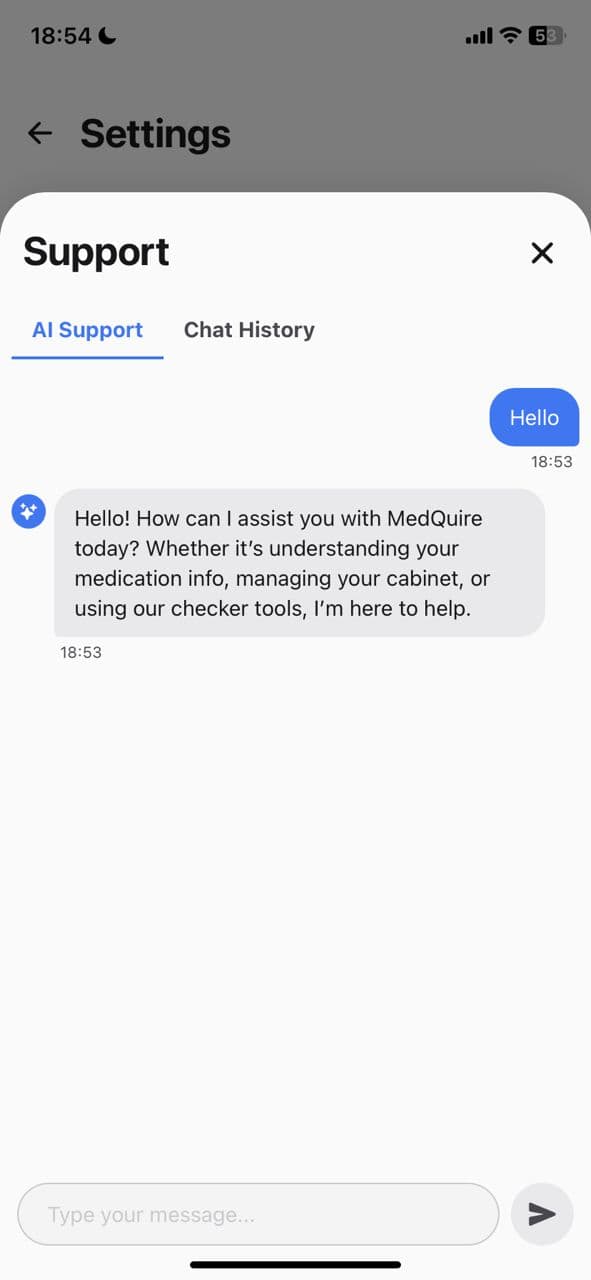
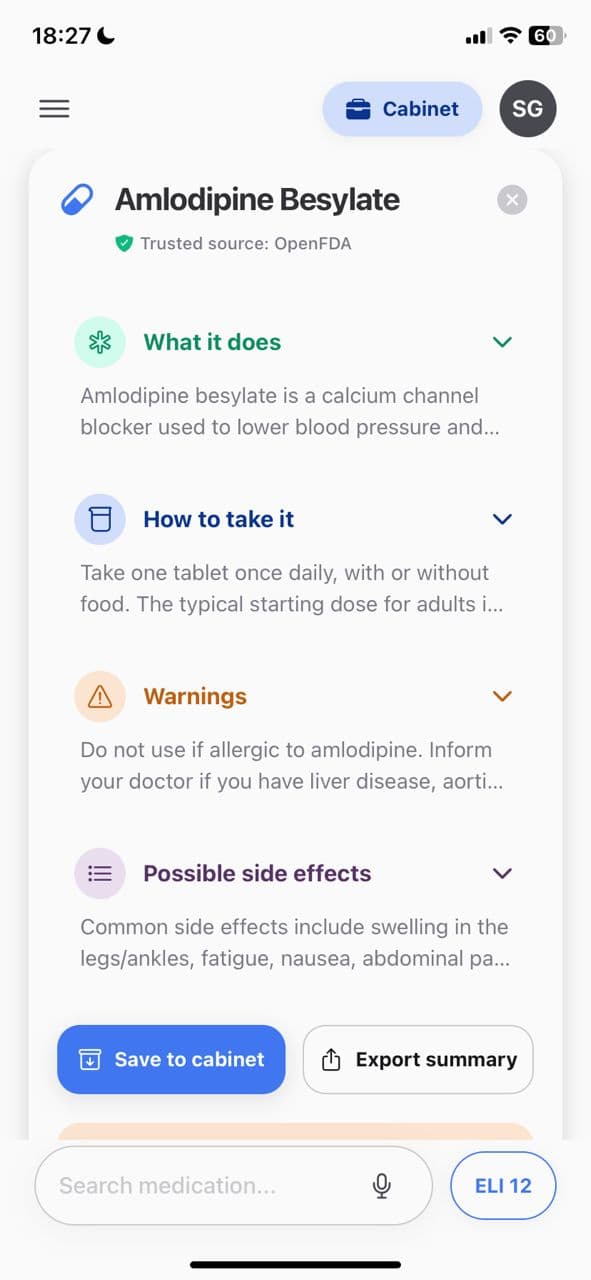
MedQuire
Medication info & management app
About
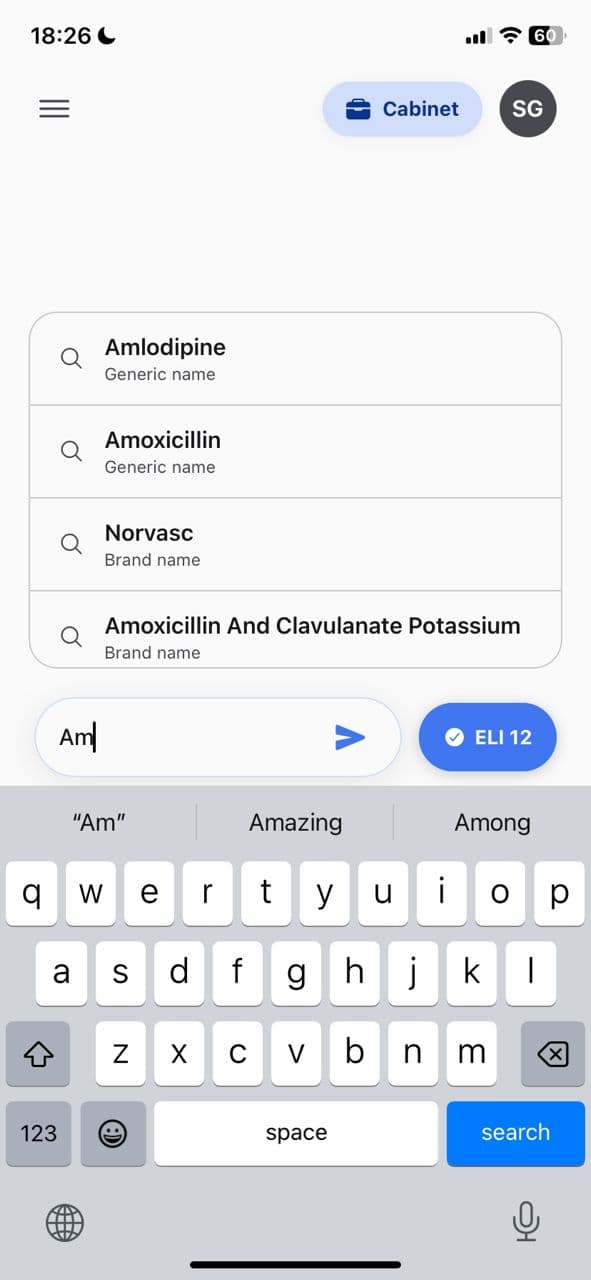
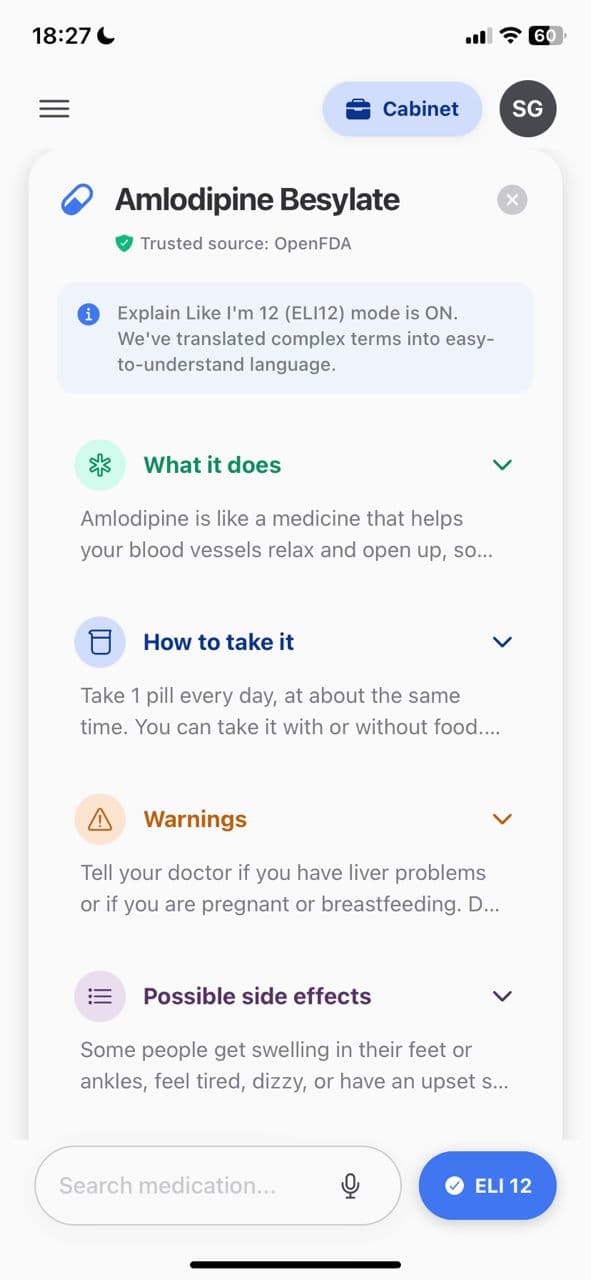
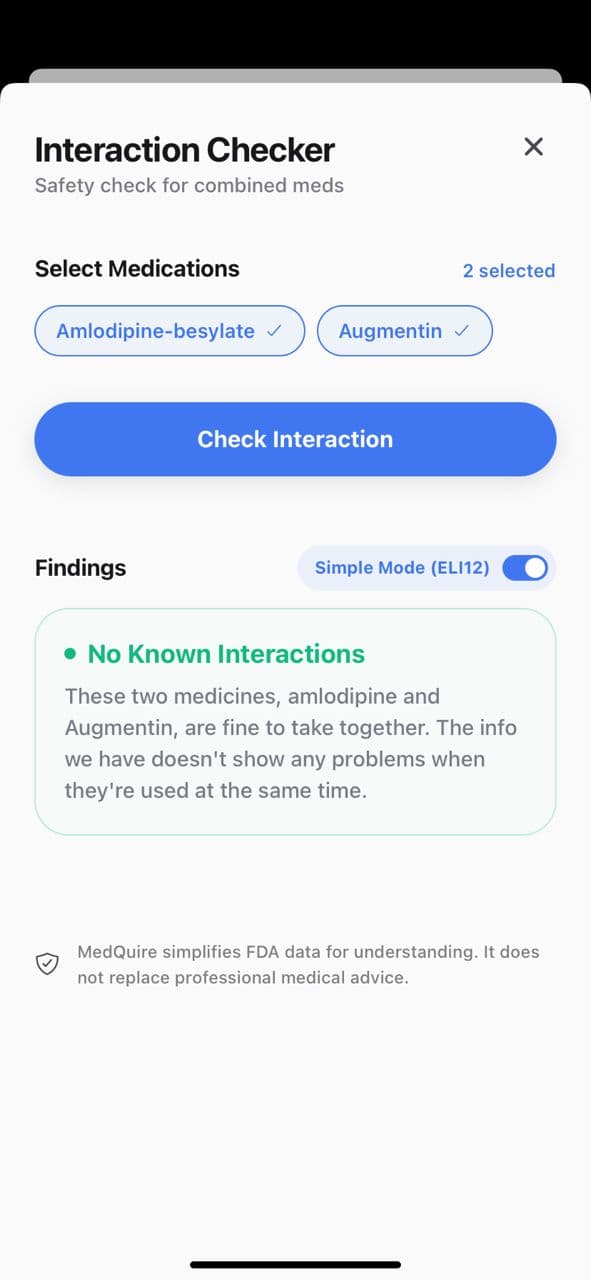
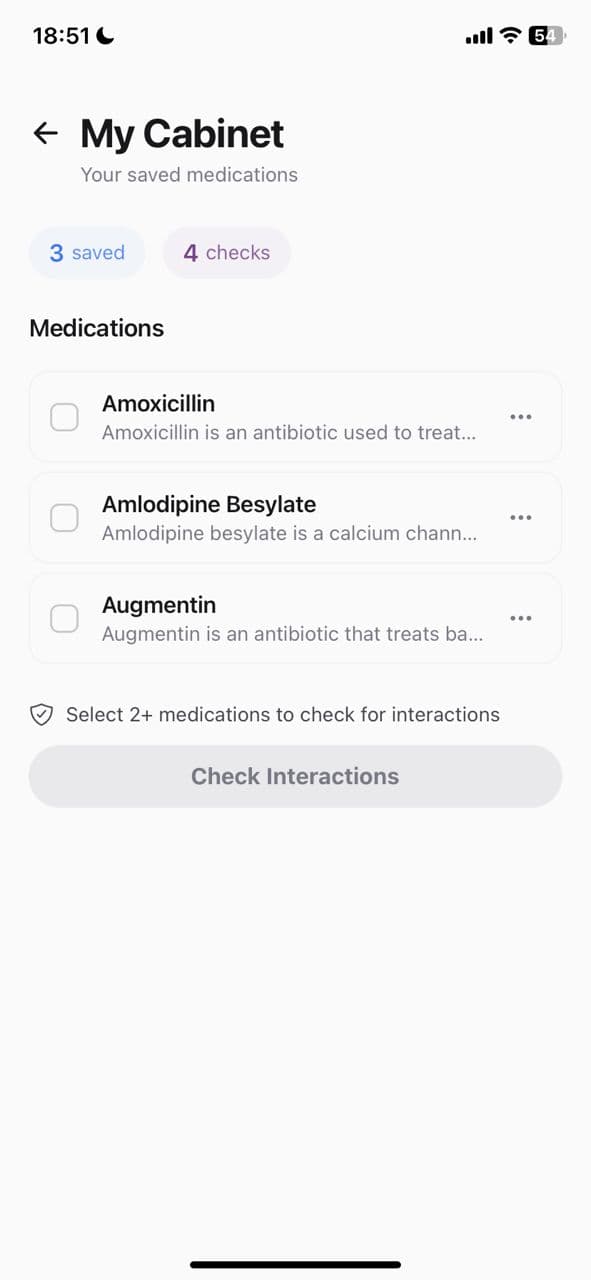
A React Native/Expo app that provides comprehensive medication information, AI-powered chat assistance, and management tools. Built with a Node.js/TypeScript backend on Railway, Supabase for auth and database, DeepSeek AI for intelligent chat, and OpenFDA for authoritative drug data.
Problem
Accessing reliable, structured medication information is fragmented — patients jump between drug label PDFs, WebMD, and unreliable forums. MedQuire consolidates FDA-approved drug data with AI-powered conversational search into a single mobile experience.
Role & Tools
Sole product designer and engineer. Designed the UI/UX in Figma, built the full-stack mobile app with React Native/Expo, and deployed the backend on Railway with Supabase for auth and data persistence.
Key Decisions
OAuth via Google Sign-In with ID token verification
Chose @react-native-google-signin/google-signin with Supabase's signInWithIdToken for seamless authentication. This avoided password management entirely while maintaining security through server-side token verification.
Paystack & Flutterwave dual payment integration
Integrated both African payment gateways via a unified webhook handler. The system normalizes payloads from both providers into a single internal transaction schema, allowing users to pay with their preferred local method.
EAS Build configuration for CI/CD
Configured Expo Application Services (EAS) for automated builds and OTA updates. This eliminated manual build coordination and enabled rapid iteration across both iOS and Android from a single codebase.
Outcome
v0.1.0 released to internal testers. Active development continues with planned App Store and Play Store launches.
Challenges
Handling offline access to drug information in areas with poor connectivity.
Implemented a local SQLite cache with background sync. Drug monographs are stored on-device with a stale-while-revalidate pattern, ensuring critical information is available offline.
Reconciling drug data from OpenFDA with user-generated content and AI responses.
Built a three-tier data model: authoritative (OpenFDA), conversational (AI), and community-generated. Each tier is clearly labeled in the UI so users can evaluate source reliability at a glance.
Screens